
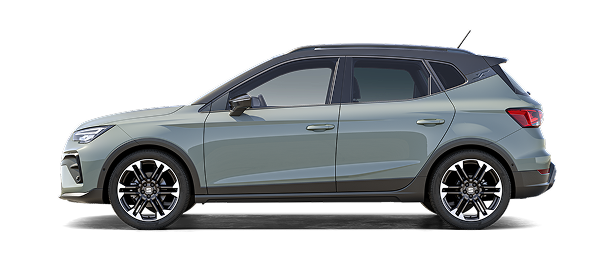
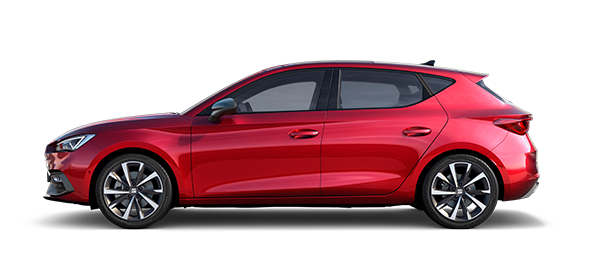



Browse available stock of SEAT models

Regulation of the turbocharger is necessary in order for almost constant boost pressure to be available across the widest engine-speed range possible.
The variable turbocharger geometry continuously changes the efficiency of the turbine and it thus guarantees that the entire exhaust gas energy can be used to control the manifold pressures. Adjustable vanes ensure this in a wide control range with simultaneously good efficiency.
If the gas pressure is reduced at a low engine speed, the vanes are adjusted to reduce the cross-section in the turbocharger, resulting in an increase in gas pressure.
If the exhaust gas pressure is increased at a higher engine speed, the cross-section of the supply line is increased by adjusting the vanes.
Turbochargers with variable turbine geometry are particularly efficient at partial load, where "turbo lag" is avoided. They increase engine power, improve its response significantly and can also have a beneficial effect on its emissions. SEAT equips all the TDI® engines with a turbocharger featuring variable turbine geometry.
 Book a test drive
 New Car search
 Find a Dealer
 Request a Quote
